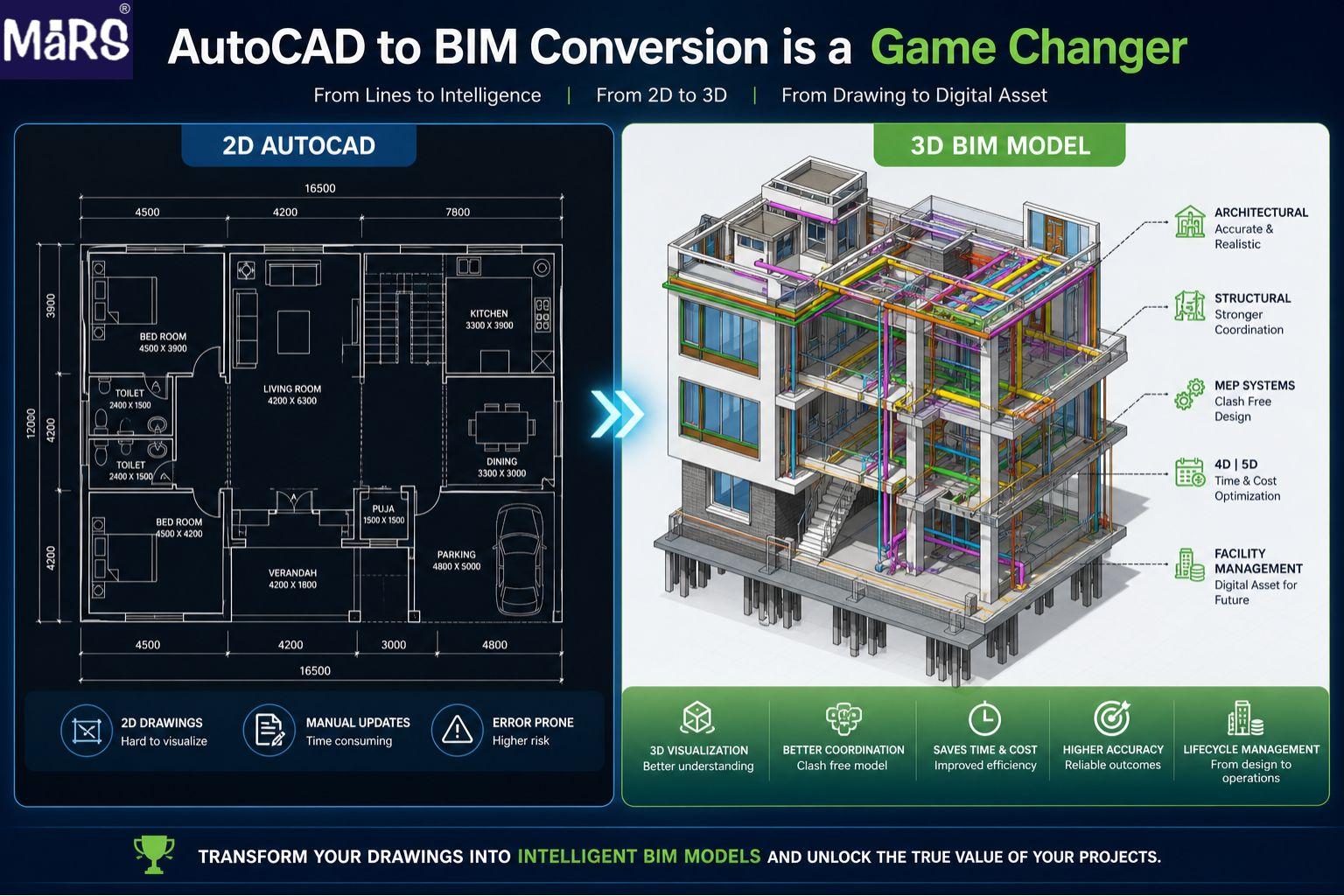
The construction industry is undergoing a massive digital transformation. Traditional drafting methods, once considered the backbone of design and construction, are now being replaced by smarter, data-driven technologies. While AutoCAD has played a crucial role in shaping the industry for decades, it is no longer sufficient to meet the demands of modern construction projects.
Today, BIM is redefining how buildings and infrastructure are designed, constructed, and managed. As a result, AutoCAD to BIM conversion has become a critical process for companies looking to stay competitive in an increasingly complex and fast-paced construction environment.
This shift is not just about upgrading technology it’s about transforming the way projects are executed from concept to completion.
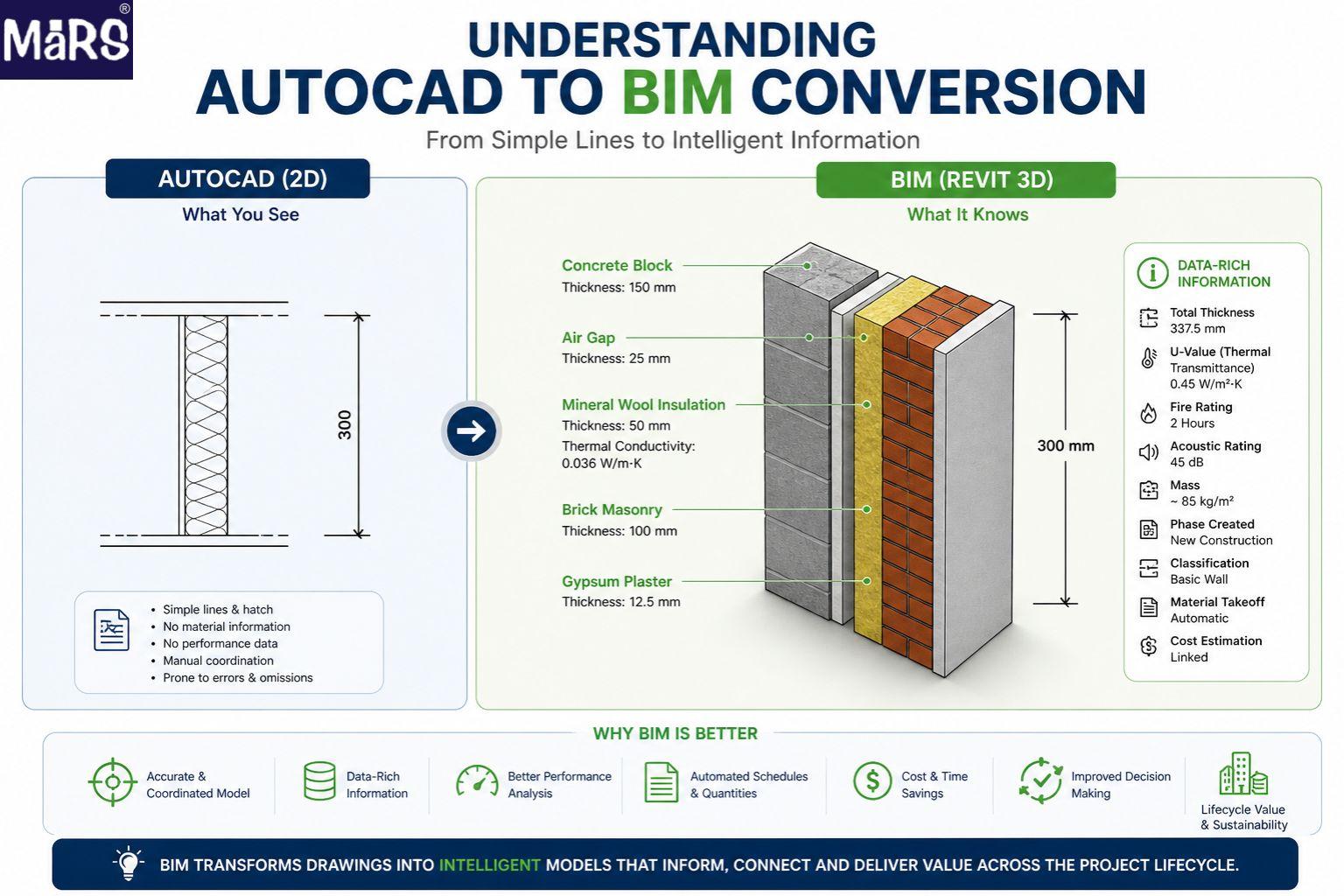
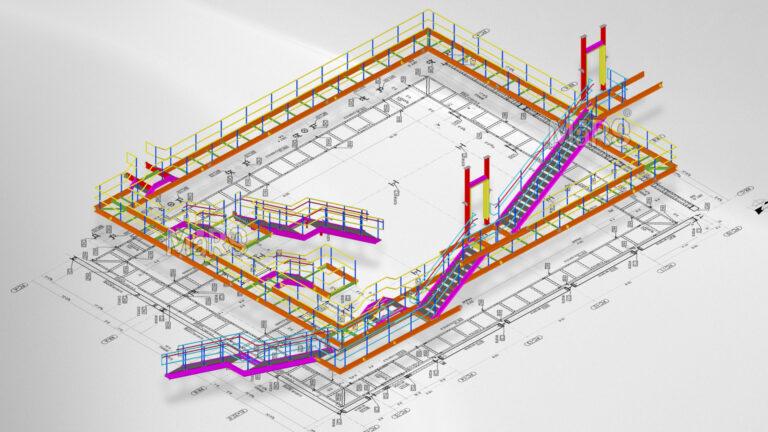
AutoCAD to BIM conversion is the process of transforming 2D drawings or basic 3D CAD models into intelligent BIM models. These BIM models are developed using advanced software like Revit and contain not just geometry but also detailed information about building components, materials, and systems. Unlike traditional CAD drawings, BIM models are data-rich and enable stakeholders to visualize, analyze, and manage every aspect of a project more efficiently.
For example, a simple wall in AutoCAD is just a set of lines. In BIM, that same wall includes information about its material, thickness, thermal properties, cost, and even maintenance data. This level of intelligence makes BIM an indispensable tool in modern construction.
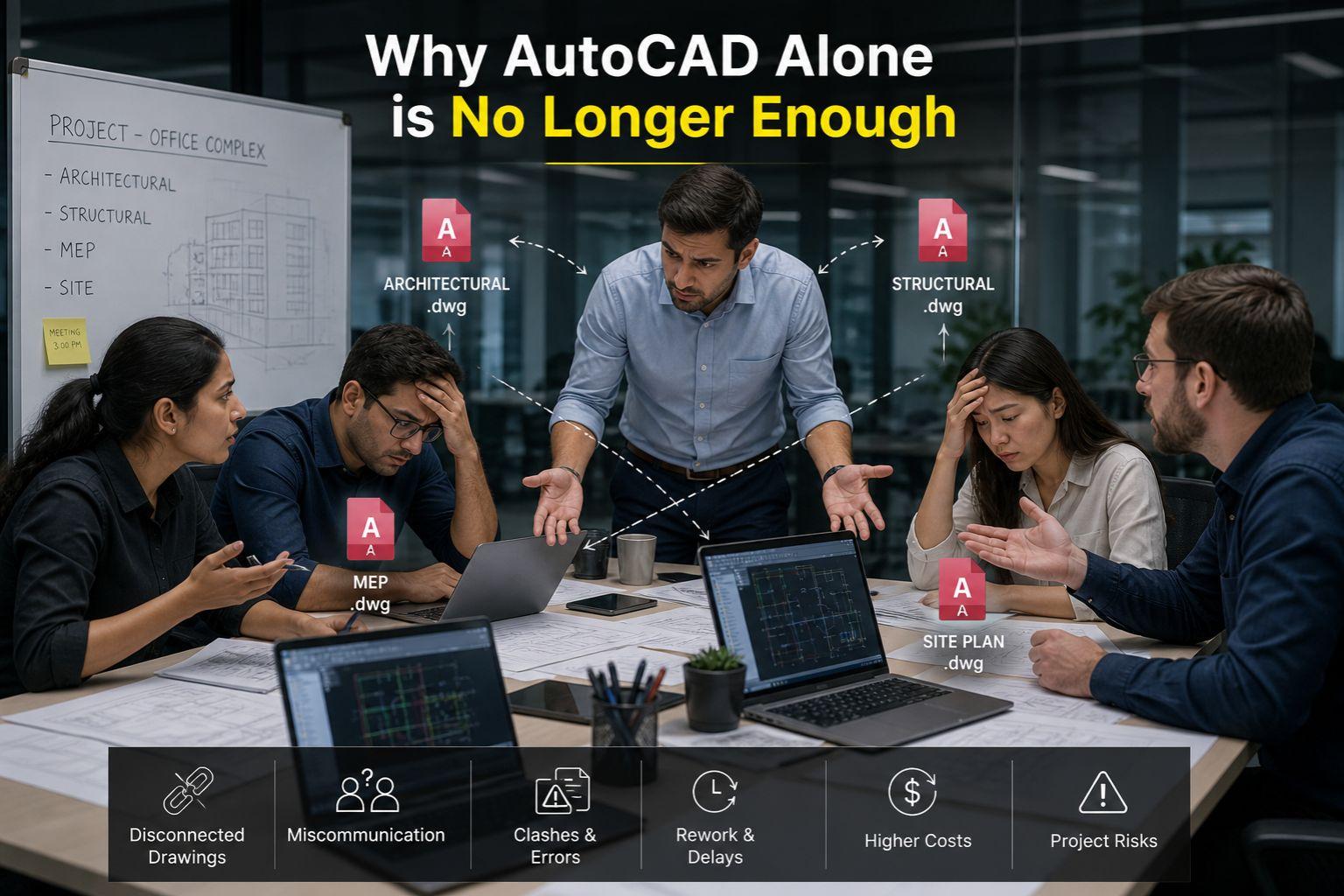
AutoCAD remains a powerful drafting tool, but it comes with several limitations when used in isolation. One of the biggest challenges is the lack of intelligent data integration. CAD drawings are static and do not provide real-time insights or updates. This often leads to miscommunication and errors during the construction process. Another limitation is the absence of efficient collaboration. Multiple teams working on separate CAD files can result in inconsistencies and coordination issues. In large-scale projects, this can significantly impact timelines and budgets. Clash detection is also difficult with AutoCAD. Identifying conflicts between structural, architectural, and MEP systems requires manual effort, increasing the chances of errors. As projects become more complex, relying solely on AutoCAD can lead to inefficiencies, rework, and increased costs.
Key Benefits of AutoCAD to BIM Conversion
-
Enhanced Visualization
One of the most noticeable advantages of BIM is its ability to create highly detailed 3D models. These models provide a realistic view of the project, helping stakeholders understand the design intent more clearly.
This improved visualization reduces ambiguity and ensures that everyone involved is aligned from the beginning.
-
Accurate Clash Detection
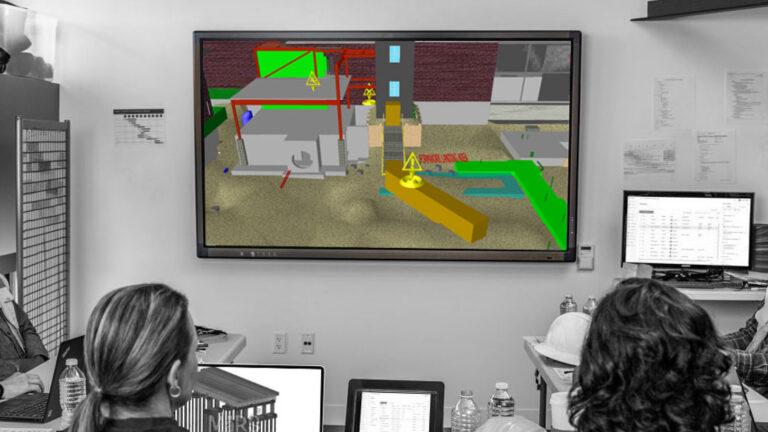
BIM enables automated clash detection, allowing teams to identify and resolve conflicts before construction begins. This proactive approach minimizes costly rework and delays on-site.
-
Improved Collaboration
With BIM, all stakeholders work on a centralized model. This ensures real-time updates and seamless coordination between architects, engineers, contractors, and project managers.
Better collaboration leads to faster decision-making and smoother project execution.
-
Precise Quantity Takeoffs and Cost Estimation
BIM models provide accurate data for quantity takeoffs, making cost estimation more reliable. This helps in better budgeting and reduces the risk of financial overruns.
-
Increased Efficiency and Productivity
By automating repetitive tasks and improving coordination, BIM significantly enhances productivity. Projects can be completed faster without compromising quality.
How AutoCAD to BIM Conversion is Transforming Modern Construction?
AutoCAD to BIM conversion is not just a technical upgrade it is a strategic transformation that is reshaping the entire construction lifecycle.
Smart Buildings and Digital Twins
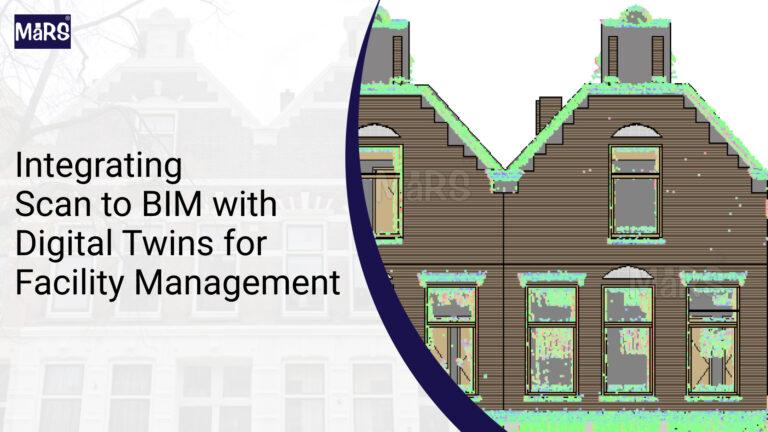
BIM plays a key role in developing smart buildings and digital twins. These digital representations allow for real-time monitoring and management of building performance.
Infrastructure Development
From highways to airports, BIM is being widely used in infrastructure projects to improve planning, design accuracy, and execution.
Renovation and Retrofit Projects
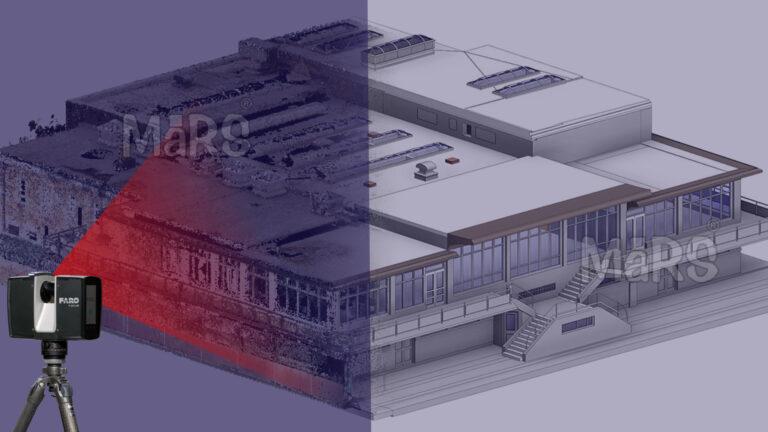
For existing structures, converting legacy CAD drawings into BIM models provides accurate as-built data. This is essential for renovation and retrofitting projects.
Facility Management
BIM models continue to add value even after construction is completed. Facility managers can use these models for maintenance, operations, and future upgrades.
Real-World Applications of AutoCAD to BIM Conversion
AutoCAD to BIM conversion is widely used across various sectors, including:
- Commercial buildings
- Healthcare facilities
- Educational institutions
- Airports and transportation hubs
- Industrial plants
Why Professional AutoCAD to BIM Conversion Services Matter?
While the concept of BIM is powerful, the quality of the conversion process determines the success of the project.
Professional service providers ensure:
- High accuracy and precision
- Compliance with industry standards
- Proper Level of Development (LOD)
- Efficient handling of complex projects
Why MaRS Trans USA LLC is the Right Choice?
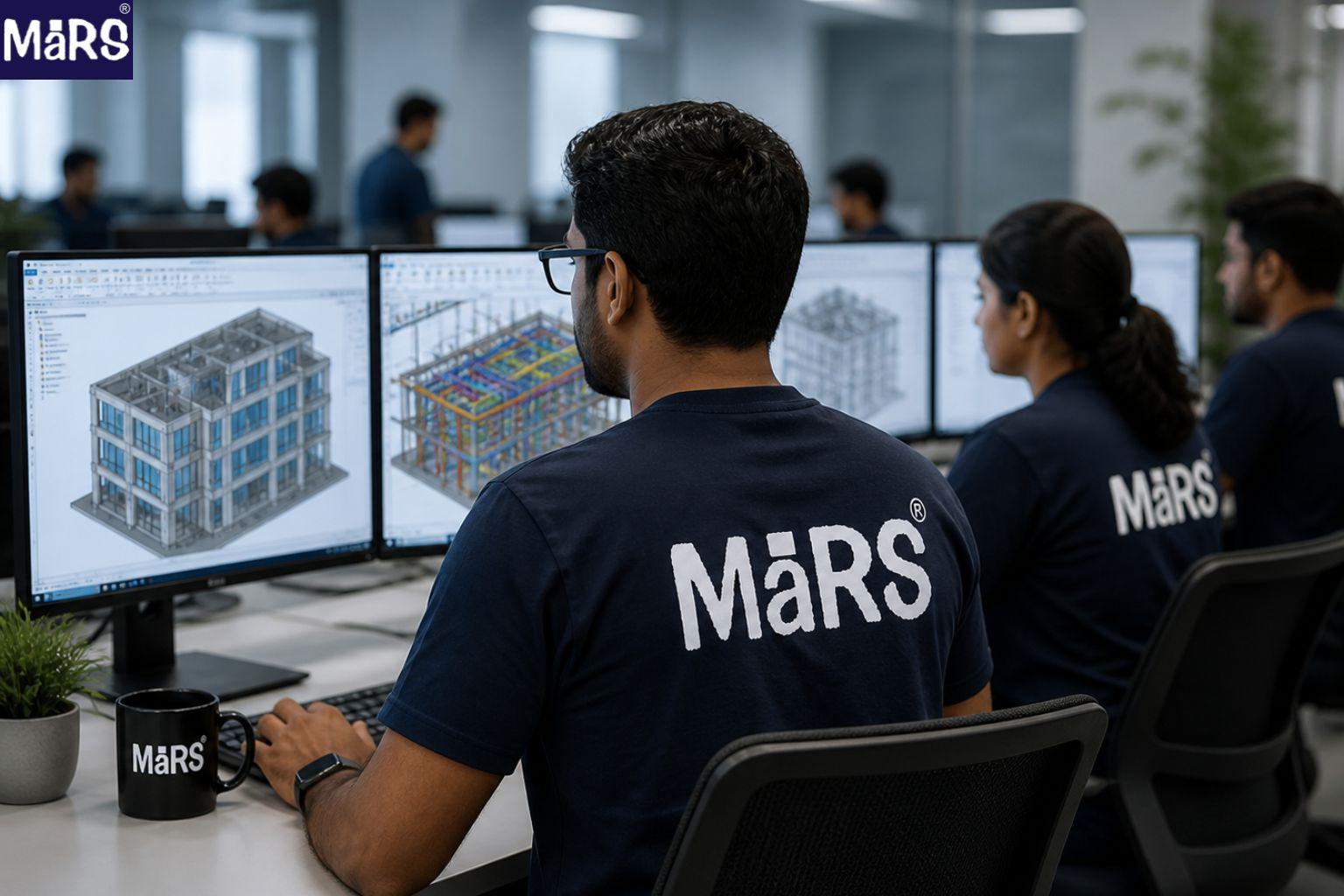
When it comes to AutoCAD to BIM conversion, choosing the right partner is critical. MaRS Trans USA LLC has established itself as a trusted provider of BIM solutions, delivering high-quality services tailored to the needs of modern construction projects. With extensive experience in handling projects across the USA, the company offers:
- Expertise in CAD to BIM and Scan to BIM services
- Skilled BIM professionals
- Advanced tools and technologies
- Fast turnaround times
- Cost-effective solutions
The Future of Construction with BIM
The adoption of BIM is only going to accelerate in the coming years. Emerging technologies like artificial intelligence, IoT, and digital twins are further enhancing the capabilities of BIM. Future construction projects will rely heavily on data-driven decision-making, sustainability, and automation all of which are supported by BIM. Companies that embrace this transformation today will be better positioned to succeed in the future.
Frequently Asked Questions
1. What is AutoCAD to BIM conversion?
AutoCAD to BIM conversion is the process of converting 2D drawings or 3D CAD files into intelligent BIM models. These models not only represent the geometry of a building but also include detailed information about materials, components, and systems, making them more useful for construction and project management.
2. Why is AutoCAD to BIM conversion important in modern construction?
It is important because it improves accuracy, enhances collaboration, and reduces errors during construction. BIM models allow teams to detect clashes early, streamline workflows, and make better decisions, which ultimately saves time and cost.
3. What are the main benefits of CAD to BIM conversion services?
The key benefits include better 3D visualization, accurate quantity takeoffs, improved coordination between teams, faster project delivery, and reduced rework. It also helps in maintaining consistency throughout the project lifecycle.
4. Which software is commonly used for AutoCAD to BIM conversion?
Tools like Revit, Navisworks, and other BIM software are commonly used for converting CAD drawings into BIM models. These tools help create data-rich models that support design, construction, and facility management.
5. Who should use AutoCAD to BIM conversion services in the USA?
Architects, engineers, contractors, construction companies, and facility managers can all benefit from these services. Anyone involved in designing, building, or managing structures can improve efficiency by using BIM models.
6. How much does AutoCAD to BIM conversion cost?
The cost depends on factors like project size, complexity, level of detail (LOD), and turnaround time. However, outsourcing to experienced service providers can help you get cost-effective and high-quality results.
7. How long does the AutoCAD to BIM conversion process take?
The timeline varies depending on the complexity and scope of the project. Small projects may take a few days, while larger or more detailed projects can take several weeks.
8. Why should I choose a professional BIM service provider?
Professional providers ensure accuracy, follow industry standards, and deliver high-quality models. They also have the expertise to handle complex projects efficiently, reducing risks and ensuring better outcomes.
9. Why choose MaRS Trans USA LLC for AutoCAD to BIM conversion?
MaRS Trans USA LLC offers reliable and high-quality BIM conversion services tailored to modern construction needs. With experienced professionals, advanced tools, and a strong project portfolio, they ensure accurate, efficient, and timely delivery.
Conclusion
AutoCAD to BIM conversion is no longer a luxury it is a necessity for modern construction projects. As the industry continues to evolve, the demand for intelligent, data-rich models will only increase. By converting traditional CAD drawings into BIM models, companies can improve efficiency, reduce errors, and deliver projects with greater accuracy and speed. For organizations looking to stay ahead of the curve, investing in professional AutoCAD to BIM conversion services is a strategic move. Partnering with MaRS Trans USA LLC ensures that your projects are built on a strong foundation of accuracy, innovation, and excellence.