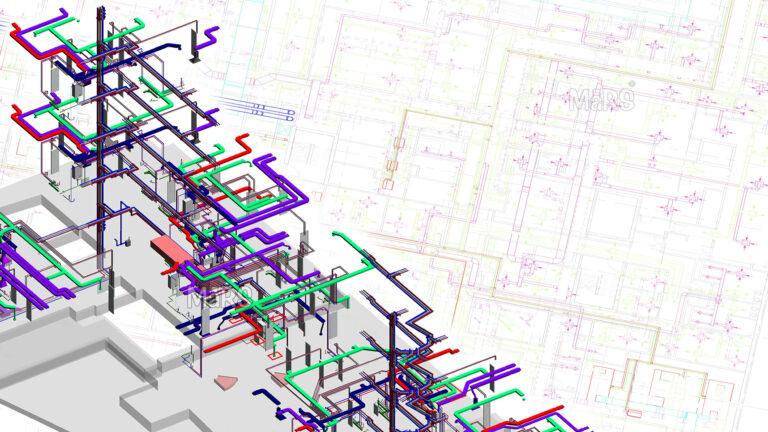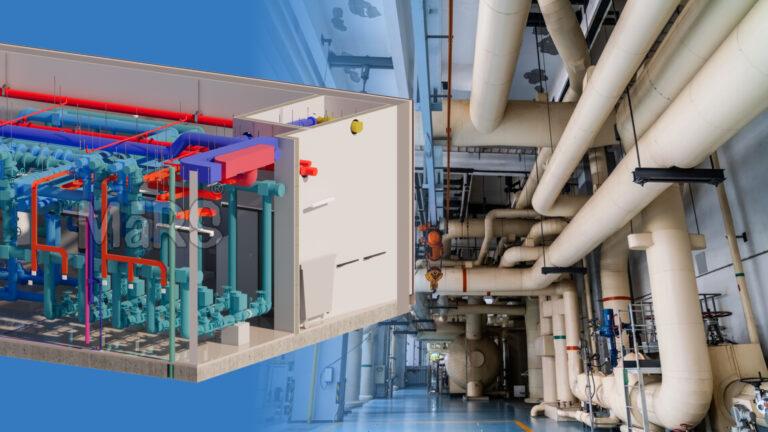

Tight service zones, overlapping systems, and accelerated project schedules have made multidisciplinary coordination one of the most demanding tasks in construction today. Structural framing, MEP routing, and architectural design rarely align perfectly without digital intervention. Engineers are expected to manage these interdependencies while addressing constructability, safety clearances, and code compliance, often before a single element is fabricated.
Design-stage disconnects between trades frequently trigger on-site clashes that escalate into RFIs, delays, and budget overruns. Without the coordination provided by MEP BIM services, ceiling congestion, misaligned embeds, and system interference with structural elements are common issues that stall installation and disrupt downstream workflows. Reactive resolution in the field not only drives rework but also compromises quality and puts engineers in constant firefighting mode.
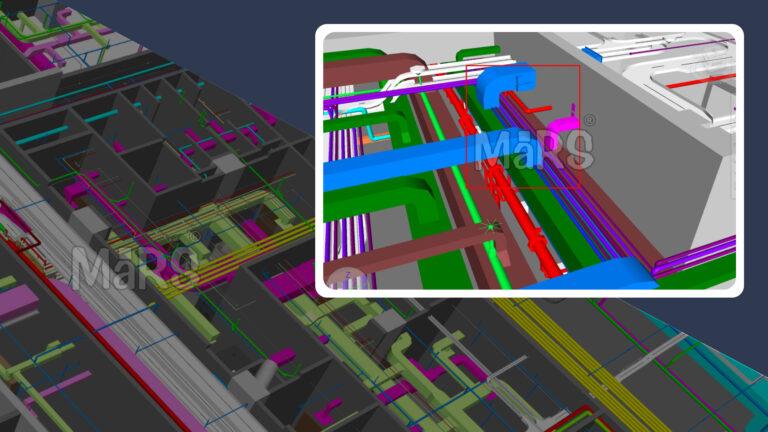
BIM has transformed the process by enabling engineers to use coordinated 3D models to identify and resolve spatial conflicts before construction starts. Instead of relying on redlines and manual overlays, they use clash detection to run interference checks, facilitate issue resolution meetings, and validate sequencing digitally. Tools like Navisworks are used in this process to aggregate models from different disciplines and conduct automated clash detection, enhancing coordination accuracy and collaboration efficiency. The move from isolated design packages to federated BIM environments has turned engineers into early-stage risk mitigators, improving both project predictability and delivery confidence.
Understanding BIM Clash Detection in the AEC Context
BIM clash detection serves as a front-line strategy for identifying coordination issues across structural, architectural, and MEP systems in a federated model. Engineers use this process to expose conflicts that directly affect constructability, whether it’s a chilled water pipe intersecting with structural steel or insufficient clearance for ductwork in a congested ceiling zone. By running discipline-specific clash rules and zone-based checks, teams gain early visibility into design interferences, access limitations, and spatial overlaps that impact field execution and installation sequence.
Model coordination using BIM begins during early design phases and continues through preconstruction, allowing engineers to address issues before they affect procurement or detailing. Federated models provide a centralized environment for reviewing, tracking, and resolving clashes across all trades. With each clash tagged by system type, location, and priority, engineering teams can focus resolution efforts based on project phases, critical zones, and fabrication lead times. This structured, model-driven approach ensures smoother field operations and greater control over delivery timelines and construction quality.
Why Engineers Prefer BIM for Clash Detection and Issue Resolution

MEP Routing in Constrained Zones
Tight ceiling voids, crowded risers, and equipment rooms often force trade systems into shared paths. Engineers use BIM to simulate spatial layouts and resolve routing overlaps before LOD 400 detailing begins.
Redlining Before Detailing, Not After
Digital clash detection allows engineers to flag interferences during LOD 300 coordination well before shop drawings or fabrication. This protects lead times for ducts, piping spools, and electrical busways.
Zone-Based Prioritization
Rather than resolving isolated clashes, engineers group and sort issues by critical zones such as operating rooms, plantrooms, or vertical shafts. It is helping project teams focus efforts based on impact to sequencing.
Responsibility Through Trade Tagging
Each issue is assigned by system and discipline, enabling clear ownership between structure, HVAC, plumbing, and electrical. This speeds up clash review meetings and avoids cross-trade assumptions.
Model-Driven RFI Context
When BIM is used for issue resolution, engineers attach model viewpoints, system metadata, and element IDs directly to RFIs. Eliminating ambiguity and reducing clarification cycles during procurement.
Coordination Sequenced with Construction Phases
Engineers align clash resolution efforts with floor-by-floor or zone-based construction schedules, ensuring coordinated areas are ready ahead of time for release to fabrication and site installation.
Field Install Logic Embedded in Resolution
Resolution decisions are not just spatial they reflect hanger placements, access zones, insulation thickness, and even lift-and-lower clearances, ensuring what works in the model works in the field.
Integration with Procurement and Prefab
Early resolution of priority clashes supports timely release of BOQs, duct spool drawings, and cable tray packages keeping vendors, suppliers, and prefab contractors aligned with coordination outputs.
Alignment with Commissioning Logic
Engineers use BIM to ensure access zones for equipment maintenance and commissioning valve access, damper controls, and panel clearance aren’t compromised by trade congestion.
Coordination Transparency for Sign-Offs
Federated models and clash reports serve as visual records of coordination progress. Engineers use this data to support formal sign-offs by trade leads, consultants, and construction managers.
Reduced Downstream RFIs and VO Exposure
BIM-based coordination reduces unplanned RFIs, variation orders, and missed scope in high-density service areas where trade interference is most common.
Model Ownership Reflects Engineer Accountability
Issue tracking through platforms ties every resolution to a responsible team or user, enabling engineers to track accountability across consultants, contractors, and internal disciplines.
Benefits of BIM Clash Detection for Engineering Projects
- Validates trade-specific routing logic in congested zones before spool or shop drawing release
- Aligns clash resolution with slab opening layouts, core wall penetrations, and embed coordination
- Provides early spatial clearance checks for maintenance zones, shaft stacking, and duct offsets
- Supports zone-based model approvals tied to construction sequencing and release packages
- Helps engineers finalize system sizing and layout within realistic field constraints
- Prevents over-dimensioning of services due to conservative assumptions in isolated designs
- Reduces fabrication delays by resolving interferences prior to MEP BIM-to-fab model transfer
- On projects like the Hospital Building BIM Project in Bahrain, enables high-density system coordination in mission-critical areas like server rooms, ORs, or labs
- Early contractor involvement by surfacing system conflicts during DD and pre-bid phases
- Avoids stacking conflicts in vertical shafts by coordinating elevation logic and space claims
- Strengthens engineering QA/QC through clash reports structured by priority, trade, and status
- Facilitates smoother commissioning by preserving access for balancing, testing, and shutdown controls
- Provides traceable issue history aligned with LOD milestones and coordination rounds
Challenges and Best Practices
Challenges
- Resolving duct-to-beam conflicts without compromising air velocity or structural clearances in tight ceiling zones
- Managing overlapping mechanical and electrical containment layouts where trades claim the same corridor space
- Coordinating opening locations in post-tensioned slabs where late conflict identification can’t accommodate core revisions
- Handling inconsistent model origin points or coordinate shifts across consultant models during federation
- Responding to last-minute architectural changes that invalidate resolved clashes or create new ones in sign-off zones
- Filtering high-volume clash reports to prioritize actual constructability risks instead of modeling artifacts
- Maintaining continuity when coordination responsibilities shift between design consultants and trade contractors
- Reconciling LOD discrepancies between structural and MEP models that affect hanger clash logic and routing constraints
- Resolving shaft stacking issues when multiple trades claim overlapping vertical routes without predefined riser logic
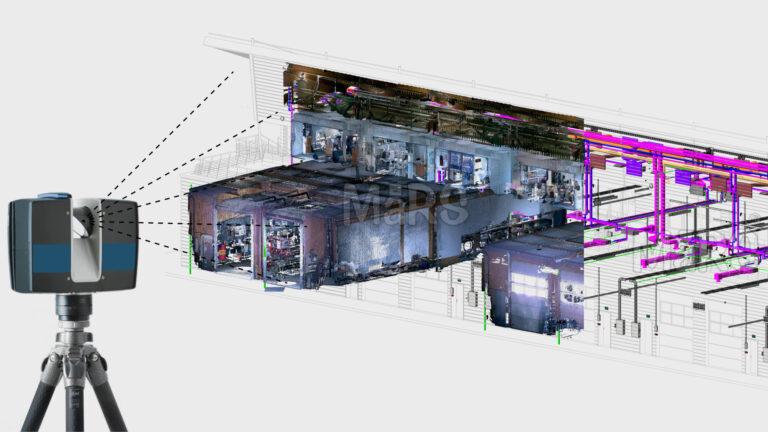
- Integrating field-measured data into coordination without corrupting model geometry or clash status workflows
Best Practices
- Run ceiling space zoning exercises with color-coded systems to define exact routing bands before LOD 300 modeling
- Lock shared coordinates and establish model alignment checks in every upload cycle to maintain spatial accuracy
- Set clash rules that ignore placeholder geometry and soft clashing items like insulation buffers or equipment tags
- Assign zone leads among engineering teams to own clash resolution in high-risk areas like plantrooms and ORs
- Use preloaded viewpoint libraries in coordination tools to speed up recurring issue identification and resolution
- Sequence clash reviews based on construction phasing, starting with service-heavy floors and long-lead areas
- Use QR-based field markups to verify clash resolution has been implemented onsite as per coordinated model
- Record clash status against procurement packages to ensure long-lead items aren’t approved with unresolved issues
- Validate trade-specific install tolerances during coordination to prevent layout conflicts during field QA/QC
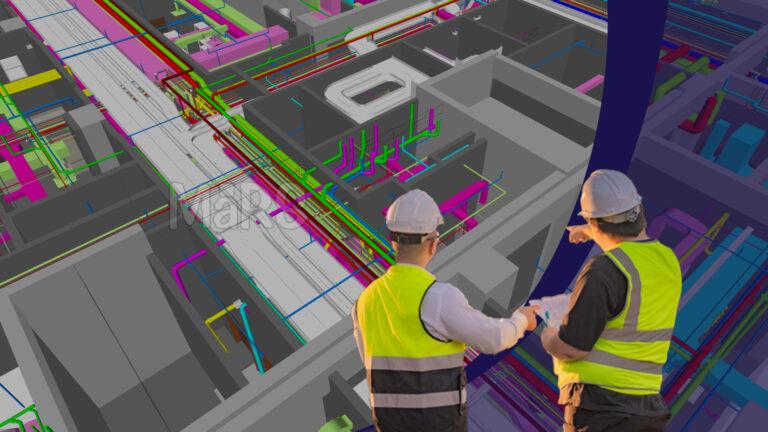
- Perform digital walk-throughs using section boxes and clash groups during issue resolution meetings for clarity
Conclusion
BIM-based clash detection has become an integral part of engineering workflows, especially on projects where service congestion, structural constraints, and aggressive timelines demand early coordination clarity. Engineers rely on federated models to validate system layouts, maintain required clearances, and sequence trade installations with precision. Coordination through BIM helps confirm that ceiling zones, risers, and plantrooms are constructible as designed, minimizing design rework and avoiding field disruptions. In high-risk sectors such as hospitals, airports, and mission-critical facilities, engineering teams use conflict finding to protect timelines, reduce project exposure, and improve construction outcomes. BIM enables engineers to maintain technical accuracy while supporting faster, more controlled project delivery.