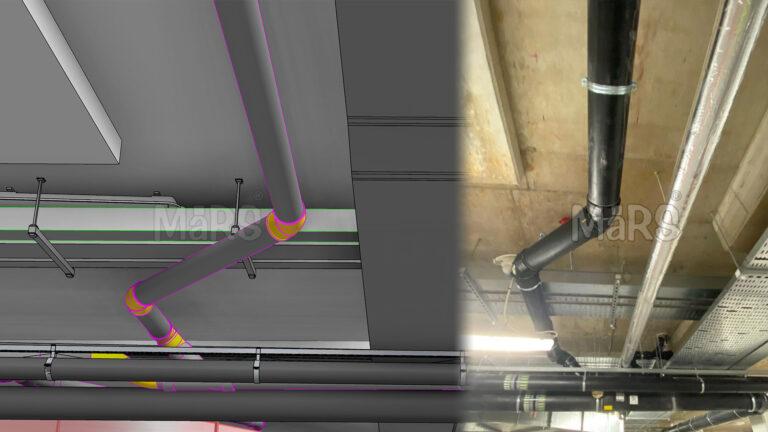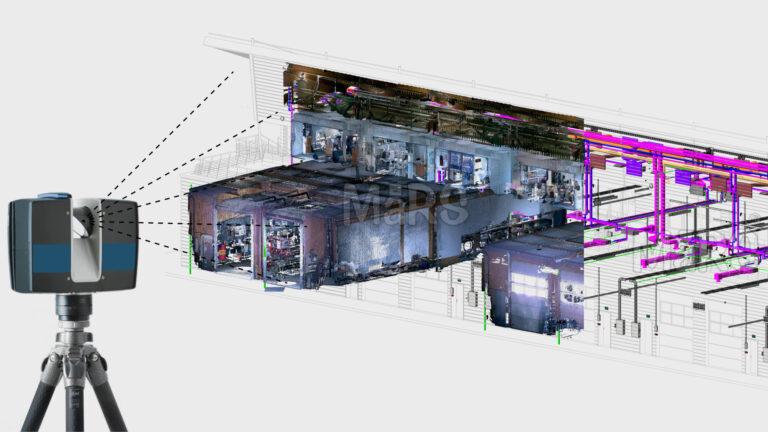

MEP systems are responsible for climate control, power supply, water distribution, and fire protection, making them important to operational performance in complex construction. In projects such as high-rise towers, hospitals, or industrial plants, these systems are densely layered within limited vertical and horizontal zones. Routing HVAC ducts, electrical conduits, and plumbing lines through structural frames and architectural zones requires precise alignment and early-stage planning. MEP BIM Services support this process by enabling early visualization, spatial planning, and trade coordination.
Tight coordination becomes complex when managing floor-to-floor constraints, high service loads, and multi-trade interfaces. Mechanical rooms, ceiling plenums, and riser shafts often become pressure points where design tolerance shrinks. Minor misalignment between a chilled water line and a cable tray can impact installation sequencing and material procurement. Without clear system hierarchy and spatial validation, trades encounter delays that ripple across the build schedule.
BIM coordination helps project teams sequence systems logically, define clear zones of ownership, and maintain installation feasibility during layout adjustments. When coordinated models include accurate clearances, access paths, and connection points, fabrication teams can proceed with confidence. This alignment across disciplines improves constructability, supports prefabrication, and keeps site activities aligned with the master schedule.
What is BIM in the Context of MEP Coordination
BIM Modeling is a process-driven approach that integrates design, data, and construction sequencing into a digital environment. In the context of MEP BIM Coordination, BIM is used to develop accurate 3D system layouts that include real-world dimensions, connection logic, and equipment specifications. These models are not limited to geometry; they also carry technical data such as voltage requirements, flow rates, duct sizing, and clearance zones. Unlike traditional CAD workflows, BIM enables trade-specific models to be federated into a unified project model, where all disciplines can validate spatial relationships and installation feasibility in real-time.
This coordinated environment supports critical tasks such as clash detection, access zone planning, and system sequencing well before site execution. Engineers and BIM leads can simulate equipment access, route trunk lines without compromising structure, and define exact hanger points for prefabrication. The BIM process also supports lifecycle planning by embedding asset data for facility maintenance and operations. In fast-paced, large-scale projects, BIM coordination becomes the foundation for accurate system integration, just-in-time delivery, and schedule-driven installation.
Understanding MEP Coordination
MEP BIM coordination involves the spatial alignment and sequencing of HVAC systems, electrical distribution, fire protection, and plumbing networks within a structure’s architectural and structural constraints. It requires system-by-system evaluation of how ducts, conduit racks, and piping will be routed through congested zones typically above ceilings, within shafts, or inside plant rooms. Coordination begins with understanding system hierarchy, assigning elevation priorities, and defining zones to prevent cross-trade interference, especially in tight interstitial spaces.
Trade contractors, design consultants, and BIM leads participate in structured model reviews to validate constructability and maintain installation tolerances. For example, electrical cable trays might require 100 mm clearance above fire sprinkler mains, or VAV boxes may need 600 mm service access beneath a slab. These constraints are verified in the coordinated model using clash detection tools and rule-based filters. When done correctly, the model evolves into a buildable guide for hangers, sleeves, and riser openings, minimizing scope gaps and sequencing delays.
Why MEP Systems Require Precise BIM Coordination
In high-density projects, floor-to-floor heights are fixed, beam depths are non-negotiable, and vertical shafts are shared across multiple trades. MEP systems, including pressure-rated pipe networks, fire mains, trunk ducts, and multi-tiered cable trays, compete for constrained routing zones. A coordinated BIM model allows trade contractors to lock in routing logic, maintain minimum spacing for insulation and fire wraps, and avoid on-site rerouting that affects downstream packages. Without precise coordination, hanger brackets clash with rebar cages, sleeves miss structural embeds, and prefab racks don’t fit into pre-poured shafts, causing rework that impacts both schedule and labor efficiency.
Construction-Driven Needs for Precise BIM Coordination
- Floor-level layout must account for sleeve positions cast into structural decks.
- Tiering rules like duct over cable tray, plumbing beneath, must be maintained consistently.
- Equipment clearances, valve access, and cleanout spacing affect future serviceability.
- Prefab spool drawings depend on signed-off coordination models for shop-level detailing.
- Riser stacks often require phased routing approvals across mechanical, plumbing, and electrical scopes.
- BIM geometry drives total station layout points for hangers, supports, and cutouts.
- Coordinated models are used for early procurement of long-lead items like ductwork and pressure pipe bends.
Strategic Solutions and Best Practices
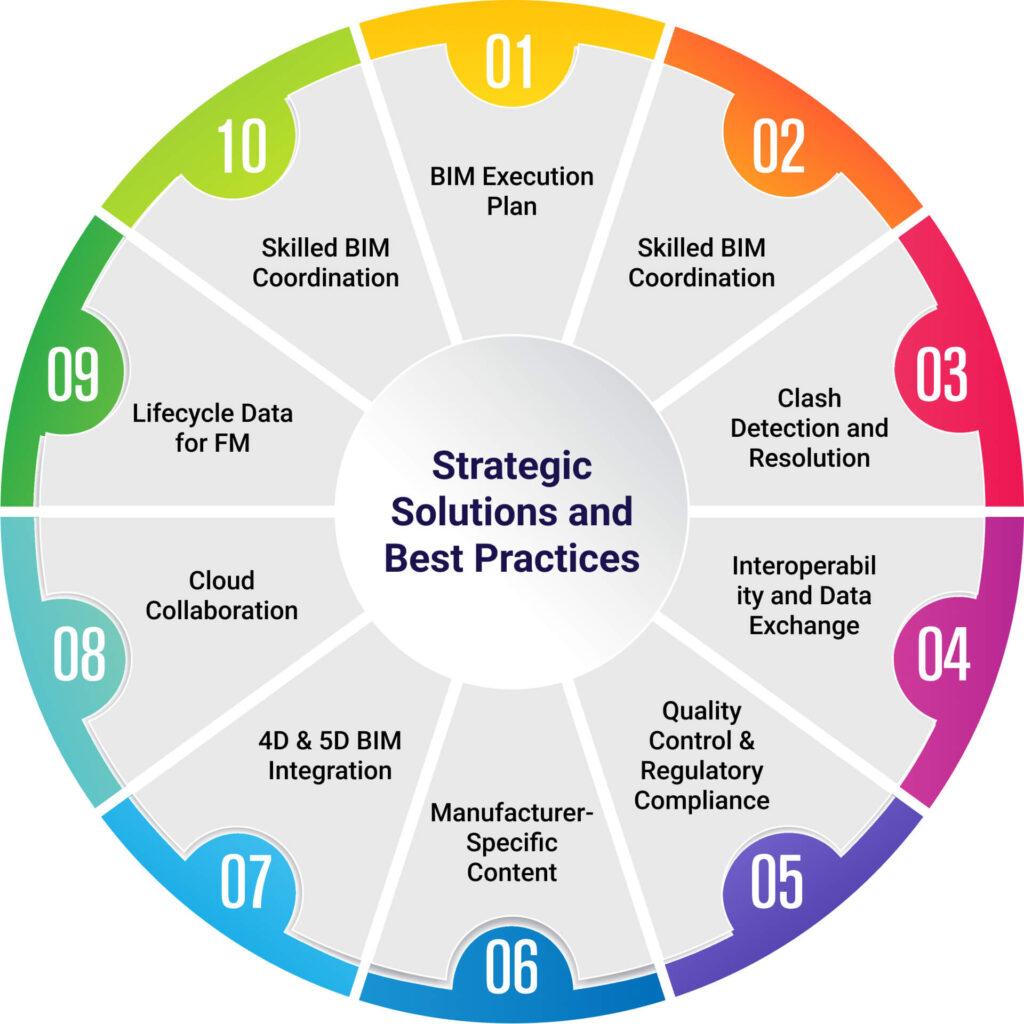
BIM Execution Plan
Contractors rely on BEPs that define not just modeling LODs, but also installation tolerances, trade sequencing rules, and sign-off workflows for risers, corridor zones, and ceiling voids. A strong BEP includes zone ownership charts and approval checkpoints mapped to construction milestones.
Skilled BIM Coordination
Effective coordination depends on BIM leads who understand not only software like Revit or Navisworks but also the constructability rules such as minimum access around AHUs, pipe hanger spacing standards, or NEC-required clearances for panels. Field-experienced coordinators speed up model validation and reduce back-and-forth.
Clash Detection and Resolution
Weekly clash runs should be scoped by level or system zone Critical clashes like duct drops cutting through beams or main feeders obstructing fire risers. This are escalated to coordination meetings. Clash reports must link back to element IDs and include assigned closure dates.
Interoperability and Data Exchange
Coordination breaks down when subs work in isolated platforms. Projects running on BIM 360 or ACC maintain central model access, version control, and cross-discipline linking. IFC exports help structural and architectural teams view MEP geometry inside Tekla or ArchiCAD.
Quality Control & Regulatory Compliance
Projects involving OSHPD, NABH, or FM Global compliance use model-based reviews for verifying firestop zones, AHJ-required access clearances, and rated shaft boundaries. Model audits also catch inconsistent family use, incorrect system assignments, or missing system tags before drawing submission.
Manufacturer-Specific Content
For projects requiring VFDs, generators, or fire pump rooms, using manufacturer-supplied Revit families ensures actual footprint, connector logic, and service clearance are accounted for in layout. This prevents coordination gaps during equipment delivery and set-out.
4D & 5D BIM Integration
Linking model elements to construction schedules helps sequence MEP install zones based on concrete pour cycles, steel delivery, or access platform availability. Cost-loaded models improve procurement forecasting and change order visibility.
Cloud Collaboration
Using shared issue tracking within BIM Collaborate Pro or Revizto allows teams to tag routing problems, assign actions to subcontractors, and confirm resolutions before issuing fabrication drawings. Cloud workflows reduce time lost in file transfer or coordination lag.
Lifecycle Data for FM
Facility handover models embed equipment barcodes, voltage ratings, flow rates, and preventive maintenance schedules into systems. This allows FM teams to connect BIM outputs with platforms like Maximo, Archibus, or Planon during operations.
Continuous Improvement
After turnover, model health reports, coordination clash logs, and RFI trends are used to update internal BIM standards refining pipe spacing libraries, hanger detail kits, or LOD requirements to improve efficiency on the next project.
Turning Coordinated Models into Field-Ready Execution
Coordinated MEP models become production assets once layout points, sleeve penetrations, and equipment pads are extracted for site use. Prefab shops rely on these signed-off models to build multi-trade racks and spool packages that align with shaft dimensions and delivery sequencing. Install crews use total station points for hanger placement and opening cutouts directly tied to model coordinates. On congested floors, foremen reference model sections on tablets to validate system tiering and valve access before overhead work begins. This integration between BIM and field improves install accuracy, shortens rough-in durations, and ensures trades stay aligned with the construction sequence.
Regulatory Compliance and Integration with BIM Coordination
MEP coordination using BIM supports early validation of systems against building codes and project-specific compliance requirements. Model-based workflows allow teams to verify clearance zones, fire-rated shaft continuity, ventilation requirements, and fixture counts in line with standards like ASHRAE for HVAC sizing, NFPA for fire protection and electrical systems, IPC for plumbing layouts, and SMACNA for duct construction. BIM models are often reviewed at key milestones such as 60% CD or pre-fab release to confirm constructability and code alignment. Integration with energy modeling and sustainability tools also helps validate system performance early, reducing redesign cycles during authority approvals and commissioning.
Conclusion
MEP coordination using BIM delivers more than visual alignment. It enables system-level decisions tied directly to install logic, trade sequencing, and compliance requirements. When models reflect accurate duct offsets, valve access zones, support details, and coordination sign-offs, fabrication and field teams operate with clarity. BIM workflows connect design intent to construction execution, reducing back-and-forth between disciplines and allowing trades to focus on productivity instead of resolving conflicts mid-install. Teams that embed BIM deeply into their coordination process see tangible gains in hanger layout accuracy, prefab hit rates, and zone-level installation sequencing, all of which contribute to faster turnover and higher project margins.