
Every building, whether it is a residential tower, hospital, stadium, or airport, stands on the foundation of accurate load calculations. From the earliest stages of design, engineers must determine how much weight the structure can safely carry, what external forces it may be exposed to, and how materials will respond over time. Traditionally, load calculations relied on manual methods, 2D drawings, and isolated engineering software. While these methods served their purpose, they often involved a high margin for error and limited collaboration across disciplines.
This is where Building Information Modeling has revolutionized the approach. By embedding load calculations directly into a digital 3D environment that integrates architectural, structural, and MEP systems, BIM ensures not only accuracy but also seamless planning across all stages of a project. With the support of professional 3D Modeling Services, teams can achieve greater precision and coordination. In today’s fast-paced construction industry, where precision, cost efficiency, and safety are non-negotiable, BIM-based load calculation has become indispensable.
Understanding Load Calculation in BIM
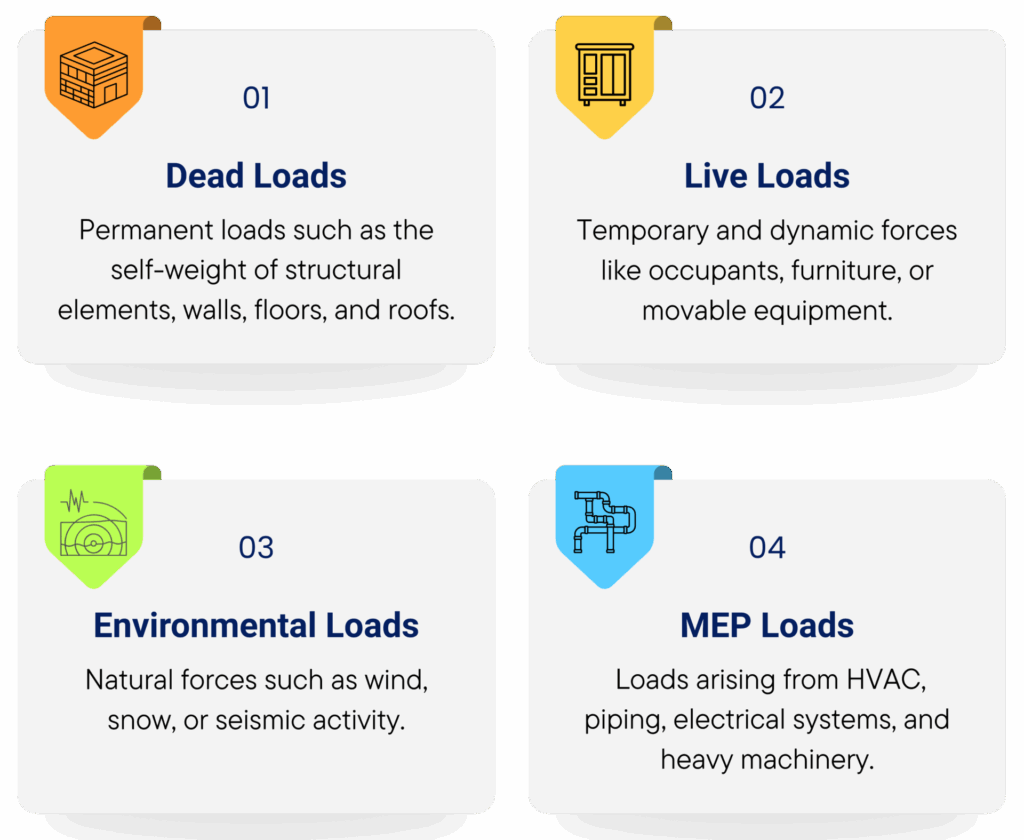
Load calculation refers to the process of determining the various forces acting on a structure and ensuring that the design can safely withstand them. These forces include:
-
Dead Loads: Permanent loads such as the self-weight of structural elements, walls, floors, and roofs.
-
Live Loads: Temporary and dynamic forces like occupants, furniture, or movable equipment.
-
Environmental Loads: Natural forces such as wind, snow, or seismic activity.
-
MEP Loads: Loads arising from HVAC, piping, electrical systems, and heavy machinery.
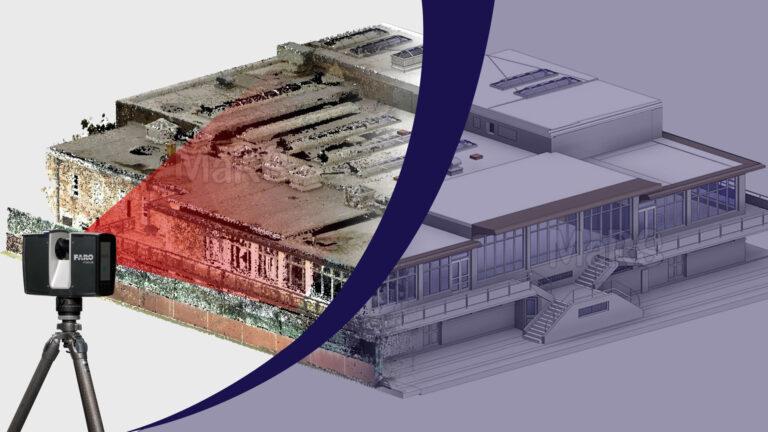
In a BIM environment, all of these loads are not analyzed in isolation. Instead, BIM integrates data from multiple disciplines into a single model. This makes it possible to simulate real-world conditions, visualize structural responses, and refine the design before construction begins. Services like Point Cloud to 2D CAD Drawing Services further enhance this process by converting scanned data into accurate 2D drawings, enabling smoother integration with BIM workflows. Unlike static 2D drawings, BIM models are data-rich—they carry information about material properties, geometry, performance characteristics, and sustainability metrics, which together create a more reliable foundation for load analysis.
Benefits of Using BIM for Load Calculation
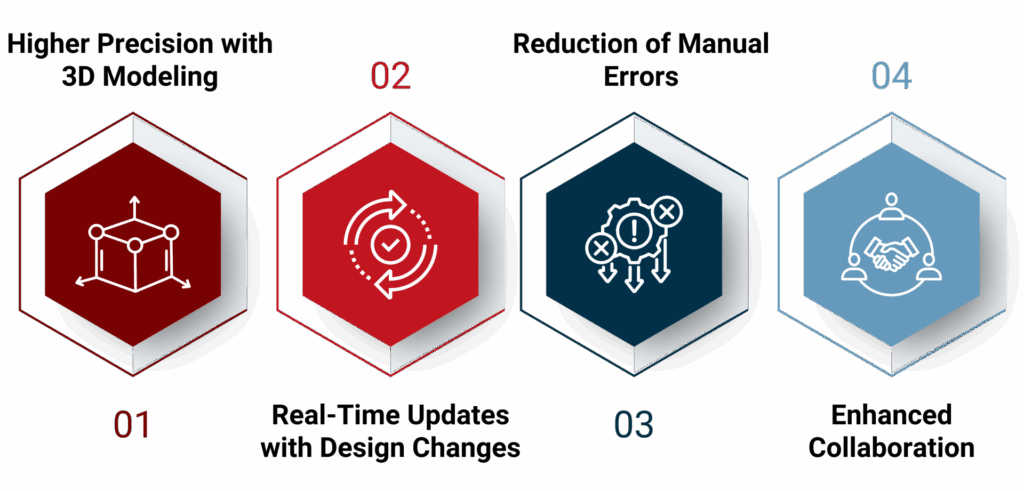
BIM-based load calculation delivers a host of advantages that go beyond just numerical accuracy.
Higher Precision with 3D Modeling
The accuracy of load calculations depends on reliable data. BIM ensures precise geometry, dimensions, and material specifications, reducing reliance on assumptions. Engineers can analyze how loads are distributed across the building and make informed design adjustments.
Real-Time Updates with Design Changes
Traditional methods often required recalculating loads from scratch after every design change. In BIM, load calculations update automatically whenever modifications are made. This ensures consistency and helps teams avoid oversights.
Reduction of Manual Errors
Manual calculations are prone to mistakes, particularly in large, complex projects. BIM automates repetitive tasks and integrates advanced simulation tools, minimizing human error.
Enhanced Collaboration
Since BIM models are centralized and accessible to architects, structural engineers, and MEP specialists, load calculations are no longer siloed. Every stakeholder has access to the same dataset, reducing conflicts and improving coordination.
Role of BIM in Accurate Planning
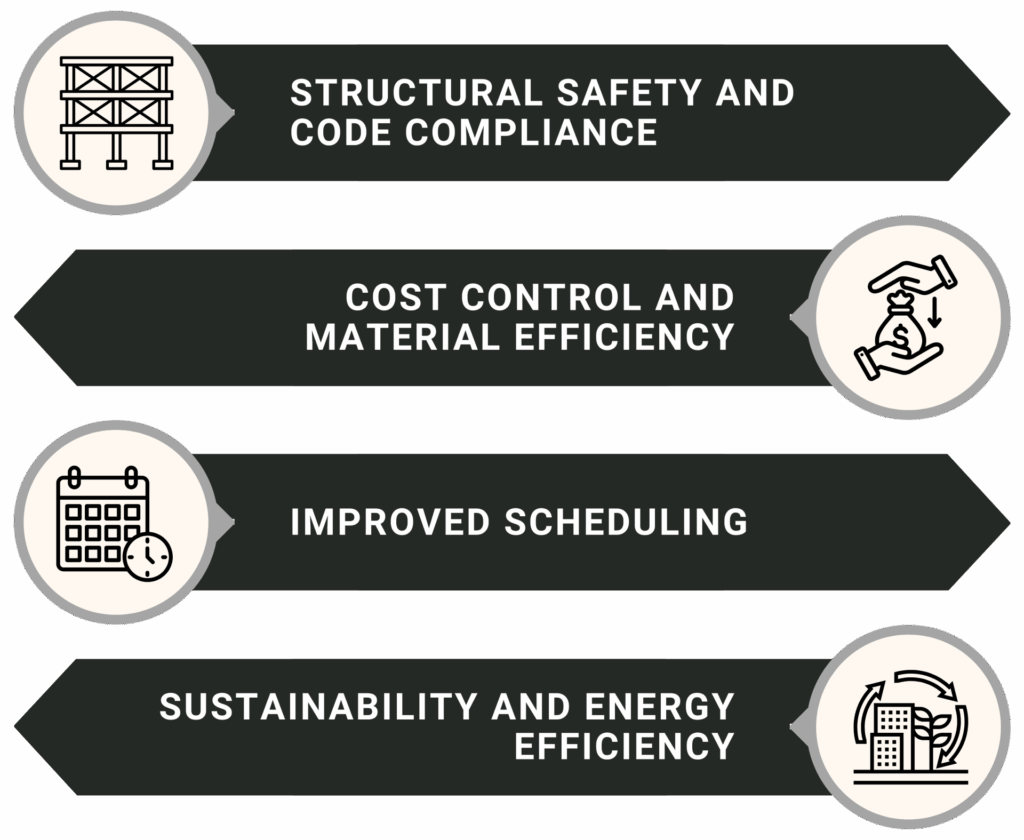
Accurate load calculation is not only about structural safety it has a cascading effect on project planning, cost efficiency, and sustainability.
Structural Safety and Code Compliance
Safety is the foremost priority in construction. BIM allows engineers to simulate various scenarios, such as seismic activity or high wind speeds, and ensure compliance with local and international building codes.
Cost Control and Material Efficiency
Accurate load calculation helps avoid over designing or under-designing. Over designing increases material costs, while under-designing jeopardizes safety. BIM strikes a balance, optimizing both cost and safety.
Improved Scheduling
Load data directly influences construction sequencing. For example, knowing the load-bearing capacity of floors can dictate the order in which heavy equipment or prefabricated components are installed. BIM integrates these insights into project schedules, minimizing delays.
Sustainability and Energy Efficiency
By accurately modeling thermal loads and HVAC demands, BIM enables energy-efficient planning. Sustainable buildings rely on precise load data to minimize energy consumption while maintaining comfort and safety.
BIM Tools and Technologies for Load Calculation
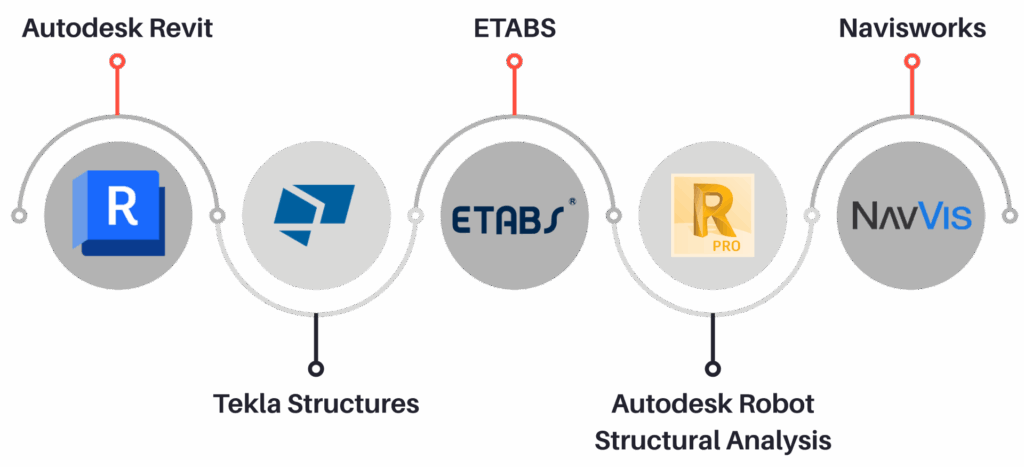
BIM-based load calculations are supported by powerful tools and technologies that extend beyond simple drafting.
-
Autodesk Revit: Widely used for architectural, structural, and MEP modeling, with integrated load analysis capabilities.
-
Tekla Structures: Provides detailed structural analysis, particularly for steel and concrete.
-
ETABS: Specialized software for structural load calculations, often integrated with BIM.
-
Autodesk Robot Structural Analysis: Allows advanced simulation and load modeling directly from BIM data.
-
Navisworks: Useful for clash detection and integrating load-related information across disciplines.
Integration between these tools ensures interoperability, allowing engineers to import/export data seamlessly. With increasing use of cloud-based BIM platforms, real-time collaboration and updates across global teams are now achievable.
Case Applications of BIM-Based Load Calculation

To better understand the practical value, consider how BIM-based load calculations are applied in different projects:
High-Rise Buildings
For skyscrapers, wind and seismic loads are critical. BIM enables real-time wind tunnel simulations and seismic resistance analysis. Engineers can visualize stress points across the building and make design changes early.
Infrastructure Projects
Bridges, airports, and stadiums demand precise calculations due to heavy dynamic and live loads. BIM integrates geotechnical data, load-bearing capacity, and material behavior, ensuring infrastructure longevity and resilience.
Renovation and Retrofitting
When dealing with older buildings, it is essential to understand how additional loads—such as new HVAC systems or solar panels—will impact structural integrity. BIM makes it possible to scan existing conditions (using point cloud data) and run updated load simulations.
Challenges and Considerations

Despite its benefits, BIM-based load calculation has some challenges:
-
Data Accuracy: The reliability of load calculations depends on the accuracy of input data. Poorly defined material properties or incomplete models can lead to errors.
-
Interoperability Issues: Not all BIM tools are fully compatible. Data exchange between software may require manual adjustments.
-
Training Requirements: Engineers need specialized training to effectively use BIM for load analysis. Lack of expertise can result in underutilization.
-
Initial Investment: BIM software and skilled professionals come at a cost. However, the long-term benefits far outweigh the upfront expense.
Future of Load Calculation with BIM

The future of BIM-based load calculation looks promising as digital technologies evolve.
Digital Twins
Digital twins allow real-time monitoring of building performance after construction. By tracking actual loads (such as occupancy or environmental stresses), digital twins can provide actionable insights for facility management.
Artificial Intelligence and Machine Learning
AI-driven tools will soon be able to predict load behaviors based on historical data, weather conditions, and material performance. This predictive capability will further enhance planning accuracy.
IoT Integration
Smart sensors embedded in structures can provide continuous data on loads, stresses, and performance. Combined with BIM, this will create a dynamic, living model that evolves with the building.
Greater Sustainability
Future BIM platforms will focus more on green building standards, ensuring that load calculations also optimize energy efficiency and reduce carbon footprints.
Conclusion
Load calculation is at the heart of safe and efficient building design. While traditional methods served the industry for decades, they often fell short in accuracy, collaboration, and adaptability. BIM-based load calculation has changed this paradigm by embedding structural, architectural, and MEP data into a single environment where precision is enhanced, errors are reduced, and planning becomes more efficient.
From ensuring compliance with safety codes to optimizing material use and reducing costs, BIM ensures that every decision made during the design and construction process is data-driven and reliable. As technology advances with digital twins, AI, and IoT, load calculations will move beyond static numbers to dynamic insights that support smarter, more sustainable buildings.
In essence, load calculation using BIM is not just a technical step—it is the cornerstone of accurate planning, helping the construction industry build safer, stronger, and more sustainable structures.