
The construction and engineering sectors in the USA are rapidly shifting toward digital transformation. One of the most impactful technologies driving this change is Scan to BIM Services. By bridging the gap between physical buildings and digital models, this technology enables precise planning, seamless coordination, and cost-efficient construction. The growing adoption of Scan to BIM Services in USA reflects the industry’s demand for accuracy, collaboration, and data-driven decision-making.
Bringing Accuracy Through Scan to BIM
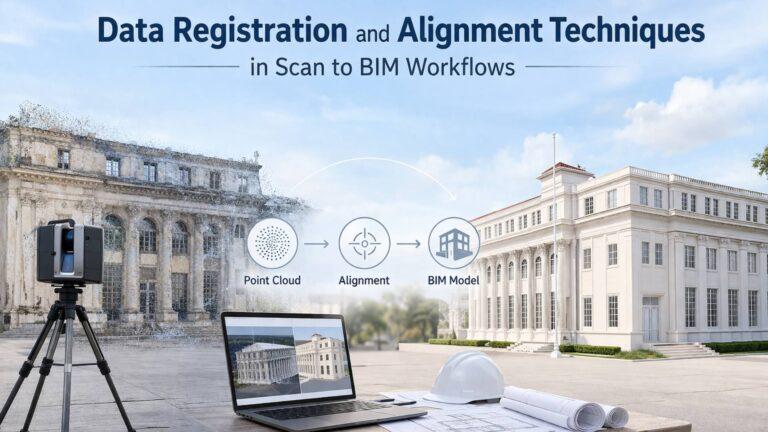
Scan to BIM is a process that captures the exact geometry of an existing building or infrastructure using advanced laser scanning devices. These scans collect millions of data points, forming a highly accurate point cloud representation of the physical environment. The data is then converted into an intelligent 3D model within BIM software.
This digital model provides a true-to-life visualization of the structure, including walls, floors, columns, beams, and MEP components. The approach eliminates guesswork and reduces rework during design and construction. Architects, engineers, and contractors rely on these models for renovation, retrofit, and expansion projects where precision is crucial.
Point Cloud to BIM Services for Reliable As-Built Models
One of the most essential stages in this workflow is Point Cloud to BIM Services. This process transforms raw point cloud data collected from laser scanners into a detailed and data-rich BIM model.
Key advantages include:
-
Creation of accurate as-built documentation for existing facilities.
-
Easy modification and design planning for renovation or expansion.
-
Better visualization of existing site conditions.
-
Quick and reliable reference for clash detection and construction planning.
Point Cloud to BIM enables teams to make informed design decisions based on verified building data. It also allows facility managers to maintain digital documentation for future maintenance and operations.
Precision with Laser Scan to BIM Services
Laser Scan to BIM Services play a vital role in ensuring every structural and MEP element is accurately represented. The laser scanners used in this process capture detailed 3D geometry of the structure from multiple angles, even in complex environments.
Applications of Laser Scan to BIM Services:
-
Restoration of historic or heritage structures.
-
Retrofit projects in industrial and commercial buildings.
-
Quality control during construction by comparing design vs. as-built conditions.
-
Large-scale infrastructure projects such as bridges, tunnels, and airports.
Laser scanning minimizes human errors that often occur in manual measurements. With this high level of accuracy, project teams can create a strong foundation for all design, coordination, and analysis tasks.
Enhancing Collaboration through MEP Coordination Services
When architectural and structural models are combined with MEP (Mechan systems, coordination becomes critical. MEP Coordination Services ensure that all systems are properly aligned within the available space, avoiding conflicts that can delay projects.
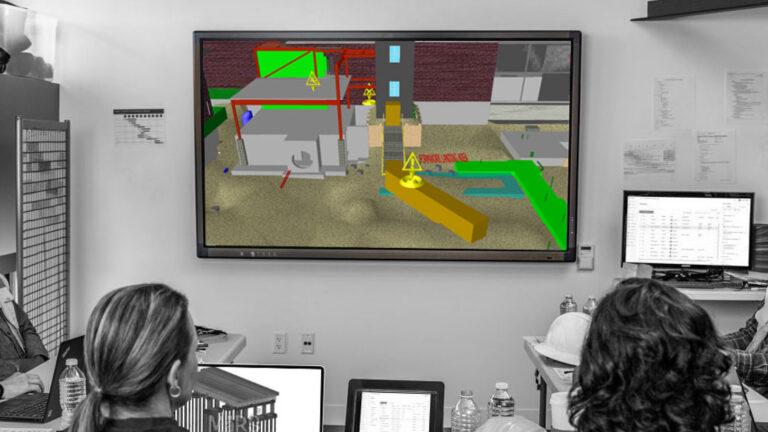
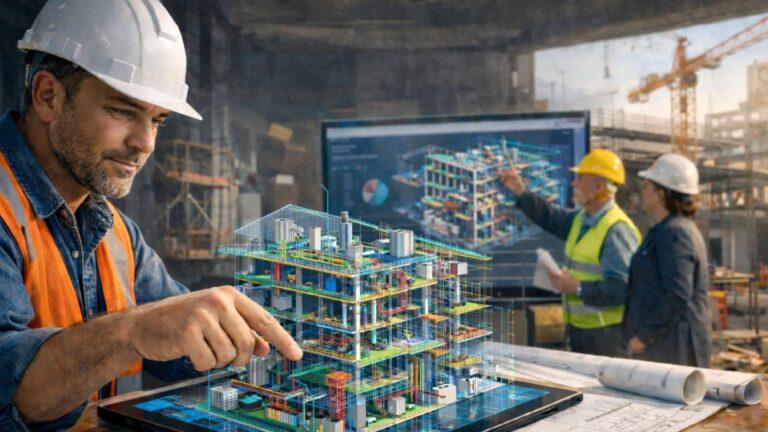
Using Scan to BIM models, engineers can visualize the placement of ducts, pipes, electrical conduits, and other mechanical components. This process allows teams to detect and resolve clashes before construction begins.
Benefits of MEP Coordination with BIM:
-
Elimination of on-site rework due to design conflicts.
-
Improved collaboration between architects, engineers, and contractors.
-
Accurate prefabrication and faster installation timelines.
-
Increased overall efficiency and cost savings.
Through coordinated MEP modeling, project stakeholders gain better control over the project lifecycle and minimize delays caused by poor communication or inaccurate documentation.
Integrating Digital Twin for Smart Facility Management
As technology continues to evolve, many organizations are moving toward the creation of a Digital Twin — a virtual replica of the physical building that is continuously updated with real-time data.
By integrating Scan to BIM Services with Digital Twin technology, facility owners and managers can monitor performance, energy consumption, and maintenance needs in real time.
Advantages of Digital Twin Integration:
-
Predictive maintenance and early issue detection.
-
Real-time monitoring of equipment and system performance.
-
Streamlined facility management using data analytics.
-
Enhanced sustainability through better resource utilization.
Digital Twins are transforming traditional building operations into intelligent, data-driven systems that improve efficiency and extend the building’s lifespan.
Industries Benefiting from Scan to BIM Services in USA

The versatility of Scan to BIM Services in USA has led to its widespread adoption across multiple industries:
-
Architecture Firms: For creating accurate as-built models and planning renovations.
-
Construction Companies: For quality assurance, clash detection, and progress tracking.
-
Engineering Consultants: For integrating structural and MEP designs into a unified model.
-
Facility Owners: For long-term asset management and performance optimization.
-
Infrastructure Developers: For modeling complex sites like bridges, plants, and tunnels.
Each of these industries benefits from improved accuracy, reduced project risks, and better collaboration between multidisciplinary teams.
Benefits Driving the Adoption of Scan to BIM Services
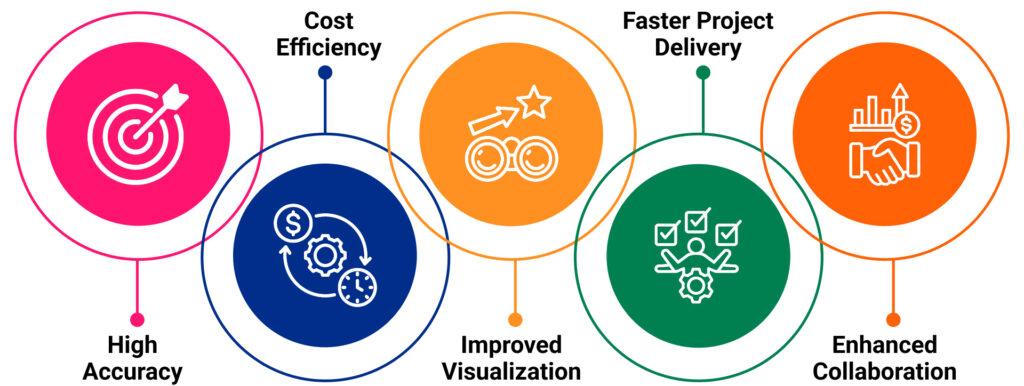
The popularity of Scan to BIM in the USA is not just due to technological advancement but also because of the tangible benefits it delivers.
Key Benefits:
-
High Accuracy: Provides millimeter-level precision for existing structures.
-
Cost Efficiency: Reduces errors and rework during the project lifecycle.
-
Improved Visualization: Offers 3D clarity for better design understanding.
-
Faster Project Delivery: Saves time in data collection and modeling.
-
Enhanced Collaboration: Enables multiple stakeholders to work on a single coordinated model.
These benefits make Scan to BIM a preferred solution for both private and public construction projects across the USA.
Overcoming Common Challenges
While Scan to BIM Services deliver numerous benefits, the process does require careful handling of large data sets and complex modeling tasks. Managing heavy point cloud files, maintaining software compatibility, and ensuring consistent accuracy can be challenging.
However, with the right technology, skilled professionals, and defined quality standards, these challenges can be effectively overcome. Many US-based BIM service providers are now investing in automation and cloud-based platforms to streamline workflows and improve model precision.
Future of Scan to BIM Services in USA
The future of the AEC industry is moving toward automation, sustainability, and digital intelligence — and Scan to BIM sits at the center of this transformation.
Artificial Intelligence (AI) and Machine Learning (ML) are already being integrated into scan data processing to automate model generation. Cloud-based BIM platforms are enabling real-time collaboration between teams across different locations. These advancements will further enhance efficiency, reduce costs, and accelerate project delivery.
Conclusion
Scan to BIM Services in USA are transforming how construction, renovation, and facility management projects are executed. By converting real-world conditions into intelligent 3D BIM models, this technology ensures precision, efficiency, and sustainability.
As the construction industry continues to embrace innovation, Scan to BIM will remain the foundation of accurate, data-driven, and future-ready project execution in the United States.